

Quick Summary
- Municipal communal bin collection in Edmonton is billed through a fixed monthly waste utility rate, not usage, so heavy-volume properties often pay for capacity they do not fully control.
- Private front-load dumpster service is priced by container size, pickup frequency, and contract term, giving property managers more room to right-size costs to actual output.
- The City of Edmonton’s Excess Waste Program adds per-cubic-yard or per-unit fees once a property exceeds its allocation, and those fees can quietly outpace a private contract over a year.
- Multi-family buildings that switched to three-stream communal collection may be paying for services (food scraps, recycling) they are not using efficiently, which inflates the real per-unit cost.
- A side-by-side comparison needs to include container size, frequency, contamination penalties, overage fees, and contract flexibility, not just the sticker price per pickup.
- Front-load dumpster service from a private provider can offer more predictable scheduling for larger or high-turnover properties, but only if the container size matches actual tonnage.
- Property managers should re-run this cost comparison annually, since municipal rate structures and provider pricing both change year over year.
What This Article Answers
If you manage a multi-family or commercial property in Edmonton and your waste line item keeps climbing, you are likely trying to answer one specific question: is the City’s communal bin rate actually cheaper than a private front-load dumpster contract, or does it just look that way on the invoice? This is a real, solvable comparison, and it depends on your property’s unit count, waste volume, and how much overage or contamination fee exposure you are currently carrying. Below is a factual, line-by-line breakdown of both options, an original cost-audit framework you can run on your own numbers, Edmonton-specific logistics to account for, and what to do if a switch goes sideways.
Municipal vs. Private Front-Load Service: Side-by-Side Cost Factors
| Cost Factor | Municipal Communal Collection | Private Front-Load Dumpster Service |
| Base pricing model | Flat monthly waste utility rate per property, set by bylaw | Priced by container size (2–8 cubic yards) and pickup frequency |
| Overage handling | Excess Waste Program fees apply once allocation is exceeded | Bin swaps or added pickups are quoted and scheduled directly with the provider |
| Contract flexibility | Fixed by City service area and bylaw; limited ability to downsize | Negotiable term length, container size changes, and seasonal adjustments |
| Contamination penalties | Sorting compliance is monitored under the Waste Services Bylaw | Handled through provider-set guidelines, typically with less enforcement friction |
| Service consistency | Set collection days determined by City routing | Scheduled or on-demand pickups, including added collection windows when volume spikes |
| Rate changes | Set annually by City Council and published in the utility rate schedule | Set by contract, often locked for the term |
| Best fit | Smaller multi-family sites with predictable, low volume | Higher-volume, high-turnover, or commercial-adjacent properties |
Edmonton’s current waste utility rate structure and the fees tied to exceeding communal collection allocations are published by the City and updated periodically, which is worth checking against your own budget cycle before assuming the municipal rate is fixed.
Breaking Down Municipal Waste Costs for Edmonton Properties
Communal collection at apartments and condos is billed as a monthly waste utility rate rather than a per-pickup charge. That rate funds weekly collection, Eco Station access, and landfill management, and it increases annually under the current bylaw structure. For most properties, this looks predictable on paper. Where it stops being predictable is volume.
Properties that regularly fill their bins before the next scheduled pickup can enroll in the City’s Excess Waste Program, which charges either a flat $6.25 per unit per month for expanded weekly capacity, or $23 per cubic yard for on-demand additional collection, capped at 50 percent of the property’s weekly allocation. Neither of those numbers shows up in the base utility rate, which means a property manager comparing “our City bill” to “a private quote” is often comparing an incomplete number to a complete one.
There is also a compliance layer. The Waste Services Bylaw mandates three-stream sorting (garbage, recycling, food scraps) in apartments and condos, and properties that do not sort correctly may see a larger share of their waste stream classified as garbage, which increases volume — and therefore overage risk.
Breaking Down Private Front-Load Dumpster Costs
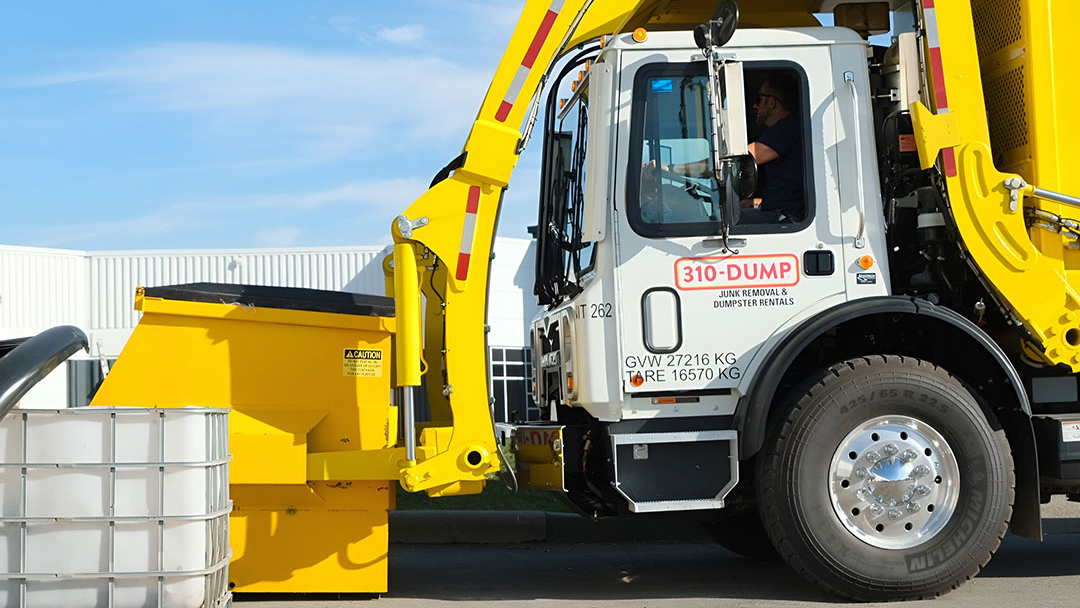
Private front-load service is priced around three variables: container size, pickup frequency, and contract length. A 2-yard bin picked up once a week costs less than an 8-yard bin picked up three times a week, and the quote should reflect your actual output rather than a standard package. This is the piece property managers most often get wrong in either direction — sizing too small and eating overage or extra-pickup charges, or sizing too large and paying for capacity that sits half full.
A properly scoped front-load contract for a multi-family or mixed-use property in Edmonton typically includes:
- A container size matched to unit count and typical fill rate, not a default size
- A fixed pickup schedule with the option to add one-off collections during move-out season or renovations
- Clear terms on what belongs in the bin (general waste, cardboard, or co-mingled recycling), since mixing streams can trigger extra charges
- A stated process for swapping to a larger or smaller bin if volume shifts
You can request a quote for front-load dumpster service once you know your current average fill rate, since that single number does more to control cost than any other input.
An Original Framework: The Four-Factor Waste Cost Audit
Property managers evaluating this decision benefit from running a structured audit rather than comparing two invoice totals. The following framework is one way to organize that comparison — it is not a claim about how any specific provider operates, just a practical model for property managers to apply to their own numbers.
Factor 1: True Volume, Not Bin Size. Track how full your bin actually is on collection day for four consecutive weeks. A bin that is consistently overflowing by Thursday on a Friday pickup schedule is undersized regardless of what the lease or utility bill assumes.
Factor 2: Overage and Penalty Exposure Pull your last 12 months of Excess Waste Program charges, contamination notices, or extra-pickup fees, whichever applies to your current service. This is the number most often left out of a “municipal vs. private” comparison, and it is usually the deciding factor.
Factor 3: Schedule Rigidity vs. Seasonal Demand Multi-family properties in Edmonton see predictable volume spikes around lease turnover (May and September) and after long weekends. Compare how each option handles a temporary spike: added on-demand collection, a bin swap, or a flat penalty.
Factor 4: Administrative Time Time spent chasing sorting compliance, disputing overage charges, or coordinating with residents on collection day has a real cost even if it never appears on an invoice. Factor it in before deciding either option is definitively cheaper.
Running all four factors against a single month of real data, rather than an annual estimate, tends to surface the actual cost gap between municipal and private service far more accurately than a rate-sheet comparison alone.
Edmonton-Specific Considerations for Property Managers
A few logistics are specific enough to Edmonton that they should factor into any cost comparison:
- Winter access. Snow clearing around bin enclosures affects both collection reliability and any per-visit access fees a provider may charge if a truck cannot reach the container.
- Alley and laneway width. Older Edmonton multi-family sites, particularly in mature neighbourhoods, sometimes cannot accommodate a full-size front-load truck without a paved alley or adjusted enclosure placement — this affects which container sizes are even viable.
- Three-stream compliance timelines. Properties transitioning onto or off communal collection under the current bylaw should confirm where they sit in that multi-year rate transition before comparing current-year numbers to a private quote.
- Holiday and statutory scheduling. Confirm how each option handles Christmas Day and New Year’s Day, since both count as no-service days industry-wide and shift the following pickup.
For property managers weighing whether their site’s layout and volume are better suited to municipal or private service, it’s worth reviewing front-load dumpster options for businesses and multi-unit properties or checking service details for the Edmonton location directly.
Step-by-Step: How to Run Your Own Cost Comparison
- Pull 12 months of waste invoices — utility bills, Excess Waste Program charges, or private contract statements, whichever applies.
- Log actual fill rate for 4 weeks at your current collection frequency.
- List every fee outside the base rate — overage, contamination, extra pickup, holiday rescheduling.
- Request a sized quote based on real fill data, not a standard package, from at least one private provider.
- Compare total annual cost, not per-pickup cost, including every fee from step 3.
- Confirm contract flexibility for seasonal spikes before signing anything.
- Set a 12-month review date so the comparison gets repeated as rates and volume change.
Common Mistakes Property Managers Make in This Comparison
- Comparing the base municipal utility rate against a private quote without adding in Excess Waste Program or overage fees.
- Sizing a front-load container based on unit count alone instead of measured fill rate.
- Assuming a locked-in private contract term means no ability to resize the bin if volume changes.
- Overlooking contamination penalties tied to incorrect sorting, which can apply under either service model.
- Treating the comparison as a one-time decision instead of an annual check, missing rate changes on both sides.
- Not accounting for administrative time spent on disputes, resident communication, or bin access issues.
What to Do If Something Goes Wrong
If a bin is consistently overflowing, contact the provider or the City before the next scheduled pickup rather than after — most overage and swap requests are easier to resolve proactively. If you are seeing repeated contamination charges under communal collection, request a sorting audit so you know whether the issue is resident behaviour or enclosure signage. If a private contract’s pickup schedule stops matching your property’s actual volume, ask about a mid-term container size change rather than absorbing extra-pickup fees indefinitely. And if you are unsure which option currently fits your property better, a waste management consultation can walk through your specific volume and layout before you commit to either path.
FAQ
Is private front-load dumpster service always cheaper than municipal collection in Edmonton? Not always. It depends on your property’s actual waste volume, fill rate, and how much you are currently paying in municipal overage or contamination fees. A property with low, steady volume may do fine on the municipal rate, while a high-turnover site often does better with a sized private contract.
What is the Excess Waste Program and how does it affect cost comparisons? It is a City of Edmonton program that charges apartment and condo properties for exceeding their communal collection allocation, either as a flat monthly per-unit fee or a per-cubic-yard charge for on-demand pickups. These charges are separate from the base utility rate and should be included in any cost comparison.
How is private front-load dumpster pricing structured? Pricing is based on container size, pickup frequency, and contract length. Providers typically quote a monthly rate once they know your property’s unit count and expected waste volume.
Can a property switch between municipal and private waste service? Eligibility depends on property type and City bylaw classification. Some properties can contract private service for commercial or front-load needs, while communal residential collection is governed by the Waste Services Bylaw. Confirm your property’s classification before assuming you can switch freely.
What causes overage fees under municipal service? Overage fees are triggered when a property’s waste volume exceeds its assigned communal bin allocation before the next scheduled collection, often due to under-sizing, contamination, or seasonal volume spikes.
How often should property managers reassess their waste service costs? At least annually, since municipal utility rates change every year under Council-approved schedules and private contract pricing can shift at renewal. Reassessing after any change in unit count, occupancy, or renovation activity is also recommended.
What size front-load dumpster does a multi-family property typically need? It depends on unit count and actual fill rate rather than a fixed formula. Front-load containers commonly range from 2 to 8 cubic yards, and the right size should be based on four weeks of observed volume, not an estimate.
Does contamination affect cost under both municipal and private service? Yes. Incorrect sorting can trigger compliance issues under the municipal Waste Services Bylaw and separate handling charges under most private contracts, so sorting accuracy matters regardless of which service a property uses.
Conclusion
The honest answer to whether Edmonton property managers are overpaying is: it depends on the number most invoices leave out — overage, contamination, and administrative cost sitting outside the base rate. Running the four-factor audit above against your own 12 months of data will tell you more than any general comparison can. Request a quote once you have your fill-rate numbers, and compare it directly against your full municipal cost, fees included. That single side-by-side is what actually settles the question for your property.
Explore More Articles

Are Edmonton Property Managers Overpaying for Waste Removal? Municipal vs. Private Front-Load Dumpster Costs Compared
Quick Summary Municipal communal bin collection in Edmonton is billed through a fixed monthly waste utility rate, not usage, so heavy-volume properties often pay for capacity they do not fully control. Private front-load dumpster service ...

Calgary Bin Rental Prices: Complete Cost Guide
Calgary Bin Rental Prices: What Determines the Final Cost? One of the first questions customers ask when planning a cleanup, renovation or construction project is: how much does a Calgary bin rental cost? The ...

Calgary Bin Sizes: 10, 15, 30 and 40-Yard Guide
10-Yard, 15-Yard, 30-Yard and 40-Yard Bin Comparisons Choosing the right Calgary bin rental begins with understanding the available container sizes. A bin that is too small may require an additional pickup or exchange. A bin ...


