

If you run a business, manage a commercial property, or operate a restaurant in Calgary, you are legally required to recycle and separate food and yard waste, not just throw everything in one garbage bin. Many businesses have a recycling container on site but still fall short because of missing signage, undersized bins, or no organics program at all.
This guide explains what the Calgary Waste Bylaw requires, how to set up front-load containers that meet it, and how to check your own site in about an hour. It’s written for owners, facility managers, and property managers who want a compliant setup without paying more than necessary.
Quick Summary
- Since November 1, 2016, Calgary businesses and organizations have had to recycle household-type recyclables plus commercial materials such as scrap metal, clear plastic film, and raw wood.
- Since November 1, 2017, food and yard waste must be kept separate from garbage for composting or diversion.
- Every collection container needs clear signage, and tenants must receive education at least once per year.
- The bylaw applies to offices, stores, restaurants, warehouses, schools, non-profits, places of worship, and property management companies.
- Having containers is not enough. You need enough containers, with sufficient capacity, in every location where they’re needed.
- Right-sized front-load bins and pickup schedules keep you compliant without paying for empty capacity.
- The five-point audit below lets you check your site before a bylaw officer does.
What the Calgary Waste Bylaw Requires From Businesses
Calgary’s commercial diversion rules sit within Waste Bylaw 4M2020. The City’s official business recycling bylaw page is the authoritative source and should be your reference for the current list of required materials.
Recycling Requirements
Since Nov. 1, 2016, businesses and organizations are required to recycle the same materials residents recycle at home plus materials specific to commercial waste such as scrap metal, clear plastic film, and raw and unprocessed wood. For most businesses, that means paper, cardboard, and containers at a minimum. Clear plastic film such as pallet wrap is often overlooked in warehouses and retail stockrooms.
Food and Yard Waste Requirements
As of Nov. 1, 2017, businesses and organizations are required to separate food and yard waste from the garbage for composting or diversion. This covers kitchen scraps, food-soiled paper where accepted, and landscaping waste from your property.
Signage and Education
You must also provide signage on all collection containers and education to tenants at least once per year. Multi-tenant landlords often miss the education requirement. Single-occupant businesses should also train staff, since staff sorting habits determine whether your recycling is usable.
Who the Bylaw Applies To
The bylaw applies to all businesses and organizations, including property management companies, offices, stores, malls, restaurants, hotels, schools, healthcare facilities, manufacturers, factories, non-profits, places of worship, warehouses and other operations. There is no small-business exemption.
What Adequate Containers Means
The City’s diversion guide for businesses defines this clearly. Adequate containers means having enough containers, of sufficient capacity, in all locations where they are needed. A single recycling bin behind a three-storey office building, overflowing by Wednesday, likely doesn’t meet this standard.
How Enforcement Works
Calgary Community Standards (Bylaw) Officers conduct random inspections to ensure businesses are compliant with the current Waste Bylaw. Officers primarily check three things: on-site diversion programs for recycling and food and yard waste, adequate containers for these materials to be deposited into for collection, and clear signage on these containers.
Requirement-to-Evidence Table
Use this table to see what an inspector looks for and what proof you should be able to show.
| Bylaw Requirement | What It Means on Site | How to Show Compliance |
| Recycling program | Separate container(s) for paper, cardboard, containers, and applicable commercial materials | Active recycling service agreement and visible containers |
| Food and yard waste program | Separate organics container, kept apart from garbage | Organics collection agreement with a hauler |
| Adequate containers | Enough capacity in every location, with no routine overflow | Pickup schedule matched to volume; indoor bins at each waste point |
| Signage | Clear labels on every collection container, indoors and outdoors | Labels showing accepted materials on every bin |
| Tenant education | Information to new tenants and at least annually to existing ones | Dated emails, memos, or posted notices kept on file |
| Materials go to diversion | Recyclables and organics actually reach recycling or composting | Hauler confirmation of service type and stream |
The Five-Point Bin Room Audit: An Original Framework
The Five-Point Bin Room Audit is a practical way to check compliance and cost at the same time. It takes about an hour and works for single storefronts and multi-tenant buildings alike.
1. Streams
List every waste stream your business produces, then confirm each required stream has its own container. Most sites need at least garbage, mixed recycling, and organics. Businesses with heavy packaging often benefit from a dedicated cardboard container.
2. Sizing
Look inside each outdoor bin the day before pickup. If it’s consistently full or overflowing, it’s undersized or serviced too rarely. If it’s consistently less than half full, you’re likely paying for capacity you don’t use.
3. Signage
Walk every collection point, indoors and outdoors. Each container should clearly show what goes in it. Faded, missing, or wrong labels are among the easiest failures to fix.
4. Schedule
Compare pickup frequency against how fast each stream fills. Food waste usually needs more frequent collection than dry recycling because of odour and pests, especially in summer.
5. Staff and Tenants
Confirm your staff know the sorting rules and that tenants have received written information within the past year. Keep dated copies of what was sent.
Score each point as pass, needs work, or fail. Any fail on streams or signage should be fixed first, since those are the most visible gaps during an inspection.
Not sure your current bins match your volume? Request a front-load quote from 310-DUMP and get a container and pickup setup sized to your actual waste.
Choosing Front-Load Containers for Compliance
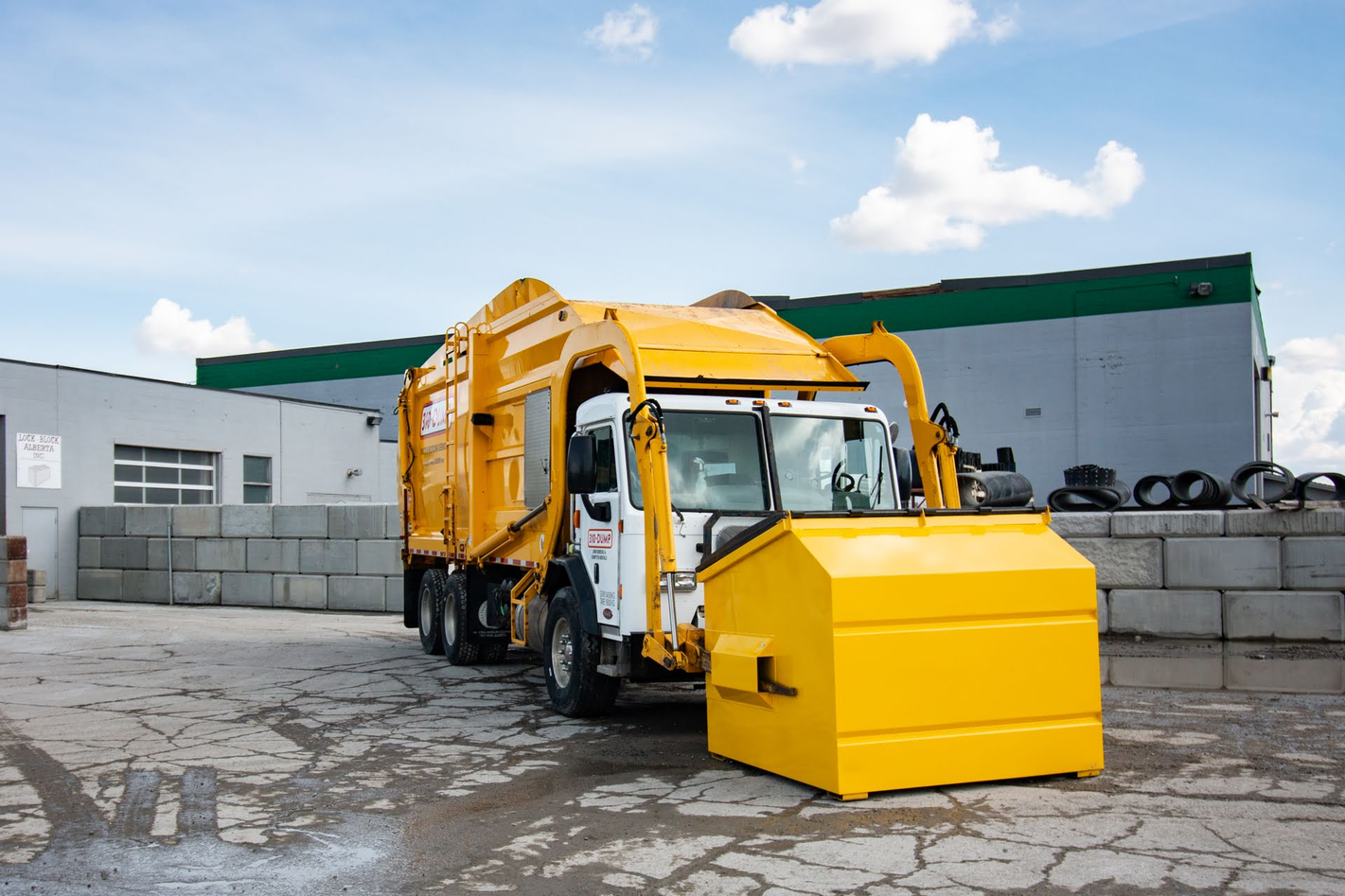
Front-load dumpsters are the standard setup for ongoing commercial waste because they’re serviced on a fixed schedule and sit in a permanent location. 310-DUMP offers front-load dumpsters for waste and recycling in 3-, 4-, 6-, and 8-yard sizes, with weekly, bi-weekly, or custom pickup schedules.
Starting-Point Setups by Business Type
These are general starting points to adjust based on your actual volumes.
- Small office: A garbage bin, a mixed recycling bin, and an organics solution for the lunchroom. Paper-heavy offices may need recycling capacity equal to or larger than garbage.
- Retail store: A garbage bin plus a dedicated cardboard bin, since packaging is usually the largest stream. Stores that receive palletized deliveries should also plan for clear plastic film.
- Restaurant or café: A garbage bin, recycling, and organics with frequent pickups. See 310-DUMP’s page on restaurant waste and recycling solutions for more on food-service setups.
- Warehouse: Garbage, cardboard, and a plan for film and raw wood from pallets. Separating wood and metal from the garbage stream is both a bylaw requirement and a potential cost saving.
- Multi-tenant commercial property: Shared containers sized for combined volume, with signage in every tenant space and a written annual education notice.
Single-Stream Recycling
Single-stream recycling lets you combine paper, plastics, metals, and containers in one front-load bin, with sorting done later at a recovery facility. This simplifies things for staff, but contamination from food, liquids, and garbage still causes problems.
Organics Collection
Ask your hauler which streams it can service at your address. If your garbage and recycling provider doesn’t collect food waste, the City maintains a directory of companies that do. You may use separate haulers for different streams, as long as each stream is diverted.
Site Logistics and Calgary Considerations
A compliant setup also has to work physically. These are the constraints that most often affect front-load service in Calgary.
Truck Access and Placement
Front-load trucks lift containers from the front, so they need a clear, straight approach and overhead clearance above the bin. Low canopies, tight parking lot corners, and cars parked in front of enclosures can block service. Confirm access with your hauler before choosing a spot for a new container.
Enclosure Space
Adding recycling and organics bins usually means more containers than your enclosure was built for. Measure the enclosure before ordering, and allow space for each lid to open fully and each bin to be pulled out without moving the others.
Winter Conditions
Calgary’s freeze-thaw cycles and chinooks create specific problems:
- Wet food waste can freeze to the inside of containers, so a pickup may not fully empty the bin.
- Snow and ice in front of enclosures can prevent trucks from reaching bins.
- Strong winds can blow lids open and scatter recyclables, especially light cardboard and film.
- Ice buildup around lids can stop staff from closing them properly, which invites pests and illegal dumping.
Keep the approach clear of snow, bag or line food waste where your hauler allows, and check that lids close properly after every pickup.
Multi-Tenant and Downtown Sites
Buildings in dense areas such as the Beltline or downtown often have shared loading areas and tight alleys. Coordinate pickup times so trucks aren’t blocked by delivery vehicles. If you manage several sites, the 310-DUMP guide on standardizing waste management across multiple locations covers how to keep container setups and signage consistent.
30-Day Compliance Setup Timeline
Follow this checklist if you’re starting from scratch or fixing major gaps.
Days 1–3: Assess
- Complete the Five-Point Bin Room Audit.
- List every waste stream and estimate weekly volume.
- Photograph your enclosure and current containers.
Days 4–10: Arrange Service
- Contact your hauler for recycling and garbage container sizing.
- Confirm who will collect food and yard waste.
- Confirm truck access, container placement, and enclosure fit.
Days 11–20: Install and Label
- Receive new or resized front-load containers.
- Place matching indoor bins at every waste point, including kitchens, break rooms, and stockrooms.
- Label every container, indoors and outdoors.
Days 21–30: Educate and Verify
- Send a written notice to tenants or staff explaining what goes where.
- File a dated copy of the notice.
- Check each outdoor container the day before pickup and adjust size or frequency if needed.
- Set a calendar reminder for next year’s annual education notice.
Want a second set of eyes on your setup? Contact 310-DUMP to talk through container sizes, pickup frequency, and placement for your Calgary location.
Common Mistakes
- Recycling bin outside, no bins inside. If staff have no convenient indoor recycling or organics container, everything ends up in the garbage.
- Skipping organics entirely. Many businesses set up recycling in 2016 and never added food waste, even though it has been required since 2017.
- Labelling only the outdoor containers. Signage is required on all collection containers, including indoor ones.
- Forgetting the annual tenant notice. Landlords often send information at move-in and never again.
- Oversizing garbage after adding recycling. Once recyclables and organics come out, garbage volume usually drops. Keeping the old garbage size and schedule means paying for space.
- Ignoring clear film and pallet wood. These are required commercial recyclables that often go straight into garbage in warehouses and retail.
- Contaminated recycling. Food, liquids, and bagged garbage in recycling can make the load unusable.
For related warning signs, see 310-DUMP’s post on signs your business needs to upgrade to front-load dumpster service.
What To Do If Something Goes Wrong
You Receive a Notice From a Bylaw Officer
Read the notice carefully and identify exactly which requirement was flagged, such as missing organics, missing signage, or inadequate containers. Fix that item first, document the fix with dated photos, and keep a copy of any new service agreement. Call 311 if the notice is unclear.
Your Recycling Is Flagged as Contaminated
Find out which contaminants were found. Then relabel the containers, retrain staff, and check whether a missing garbage bin near that location is forcing people to use recycling for garbage.
Bins Keep Overflowing
Overflow means the container is too small or pickups are too infrequent. Ask your hauler about a larger container, an added pickup day, or a dedicated cardboard bin to take pressure off mixed recycling.
A Pickup Is Missed
Check whether access was blocked by snow, parked vehicles, or a locked gate. Contact your hauler the same day to arrange service, and fix the access issue so it doesn’t repeat.
A Tenant Refuses to Sort
Send a written reminder of the sorting rules and bylaw requirements, and keep a copy. Consider adding sorting obligations to lease renewals or building rules.
Frequently Asked Questions
Does Calgary’s recycling bylaw apply to small businesses?
Yes. The bylaw applies to all businesses and organizations, including small offices, stores, restaurants, non-profits, and places of worship. There is no exemption based on size.
What materials must Calgary businesses recycle?
Businesses must recycle the same materials residents recycle at home, plus commercial materials such as scrap metal, clear plastic film, and raw, unprocessed wood. Check the City of Calgary’s business recycling page for the current full list.
Do Calgary businesses have to separate food waste?
Yes. Since November 1, 2017, businesses and organizations must separate food and yard waste from garbage so it can be composted or diverted. This applies to offices with lunchrooms as well as food-service businesses.
Do I need signs on my recycling and organics bins?
Yes. Signage is required on all collection containers, showing what materials go in each one. This includes indoor bins as well as outdoor front-load containers.
How often do property managers need to educate tenants?
Tenants must receive information about the recycling and food waste programs at least once per year, and new tenants should receive it when they move in. Keep dated copies of notices as proof.
Can I use different haulers for garbage, recycling, and organics?
Yes. Calgary businesses can choose their own collection providers, and you can use different companies for different streams. What matters is that each required stream is collected and diverted.
What front-load dumpster size does my Calgary business need?
There’s no standard size, since it depends on your weekly volume for each stream. Small offices and shops often start with 3- or 4-yard bins, while higher-volume sites may need 6- or 8-yard bins or more frequent pickups.
What happens if a bylaw officer finds my business non-compliant?
Bylaw officers conduct random inspections and check for diversion programs, adequate containers, and signage. If an issue is found, correct it promptly and keep records of the fix, such as photos and new service agreements.
Conclusion
Calgary’s Waste Bylaw requires more than a recycling bin behind your building. You need separate recycling and food waste programs, enough container capacity in every location, clear signage on every bin, and yearly education for tenants.
The Five-Point Bin Room Audit and the 30-day timeline give you a practical way to find and fix gaps. Right-sizing your front-load containers at the same time can also keep costs under control.
Get your Calgary business set up the right way. 310-DUMP provides scheduled front-load garbage and recycling service with container sizes and pickup frequencies matched to your volume. Request a quote today or call (403) 264-3867 to speak with the Calgary team.
Explore More Articles
How Alberta Franchise Operators Can Standardize Waste Management Across Multiple Locations (and Cut Costs Doing It)
If you operate more than one franchise location in Alberta, you already know that waste management rarely gets the same attention as staffing, inventory, or sales. Yet inconsistent bin sizes, mismatched pickup schedules, and one-off ...
Are Edmonton Property Managers Overpaying for Waste Removal? Municipal vs. Private Front-Load Dumpster Costs Compared
Quick Summary Municipal communal bin collection in Edmonton is billed through a fixed monthly waste utility rate, not usage, so heavy-volume properties often pay for capacity they do not fully control. Private front-load dumpster service ...

Calgary Bin Rental Prices: Complete Cost Guide
Calgary Bin Rental Prices: What Determines the Final Cost? One of the first questions customers ask when planning a cleanup, renovation or construction project is: how much does a Calgary bin rental cost? The ...


